
My Journey - Puzzles & Stories
ZenLife Games LtdCasual
4.8304.00 Reviews
- Version
- 1.35.0819
- Installs
- 50.00K
- Age Rating
- Teen
Screenshots

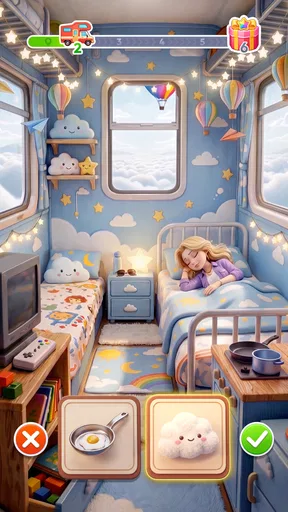
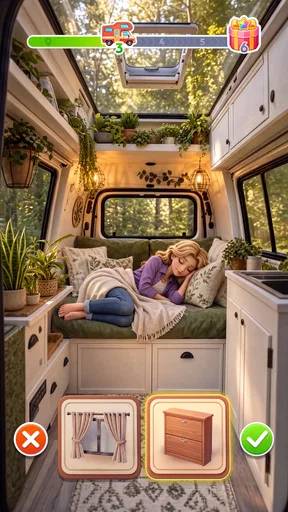


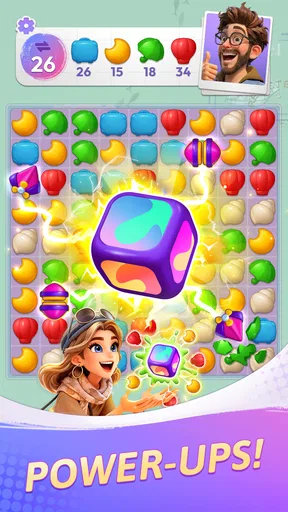

Our Review of My Journey - Puzzles & Stories
 Analysis by Appyee
I like casual puzzle games that understand the difference between a five-minute break and a full evening of play. My Journey - Puzzles & Stories is built around that kind of moment: a match-3 game from ZenLife Games Ltd where each completed puzzle helps move Olivia’s mystery forward. It is free to start, easy to understand, and more focused on a light story journey than on demanding players’ full attention.
That sounds familiar because match-3 games have a well-established formula. What makes this one worth considering is the way it combines quick board-clearing with a sense of progress. I can open it when I have only a short window, make a little headway, and leave without feeling that I have abandoned a complicated strategy game. At the same time, it is not a perfect fit for everyone. Players who want deep tactics, uninterrupted action, or a large amount of novelty may find its structure too comfortable.
How the first few minutes feel
The opening appeal is immediate. The basic match-3 idea needs very little explanation, so I can begin playing without learning a long list of controls or systems. Matching pieces, looking for useful combinations, and working toward the current objective create a clean loop. Olivia’s journey gives those individual boards a reason to exist beyond simply chasing a score.
I found that clarity especially useful when playing with divided attention. If I am waiting for an appointment or taking a short break, I do not want to reconstruct a complicated plan from the previous session. The board presents a self-contained problem, and the story provides a gentle reason to continue. That balance is the game’s strongest first impression.
The casual category suits it well. This is not the sort of puzzle game I would choose when I want to test myself against a brutally difficult challenge. Instead, it works as a relaxed routine with occasional moments where a board asks me to think more carefully about the order of my moves. The pleasure comes from seeing a messy layout become manageable, then watching that small success feed into the wider mystery.
The game is free, which makes trying it straightforward. Its content rating is Teen, so I would still check whether its tone and presentation are appropriate for the younger members of a household before handing over a device. Optional purchases range from $1.99 to $99.99 per item, an important detail for anyone who prefers to keep casual games strictly within a no-spend limit.
On Android, it requires version 6.0 or later. That gives it a fairly broad device starting point, although the practical experience will still depend on the phone or tablet itself. I would make sure the device has enough available space and that the battery is not already low before settling into a longer session, especially if I am playing away from home.
A useful way to approach each board
My first tip is not to make the quickest visible match automatically. In many match-3 situations, the most obvious move is merely tidy rather than useful. I get better results by scanning for matches that can affect several nearby pieces, create room around a blocked area, or prepare a stronger follow-up. That habit matters more than speed, particularly when an objective depends on reaching a specific part of the board.
I also try to read the board from the bottom upward before committing. Clearing lower pieces can change the arrangement above them, while a move at the top may produce less useful movement. This is not a complicated expert system; it is simply a way to avoid spending a move on a match that leaves the important section untouched. New players can adopt it immediately without turning the game into homework.
A second practical insight is to treat the story as a pacing tool. If I am tired or only have a few minutes, I play one board and stop at a natural point rather than pushing through several levels out of habit. The mystery gives the session a satisfying endpoint, while the match-3 format keeps the commitment small. That makes the game easier to fit around daily life than puzzle titles that expect long, uninterrupted runs.
Where the story helps the puzzle loop
Olivia’s mystery is not just decoration from my point of view. It gives the game a softer sense of direction. A standalone board can be enjoyable, but a sequence of boards feels more meaningful when each one belongs to a continuing journey. I am more willing to return after a break because I remember the character and the unresolved thread, not only the mechanics.
The trade-off is that story-led casual games can make progress feel more linear than traditional score-chasing alternatives. If I want to replay a favorite board purely to improve a personal result, the narrative journey may not provide the same motivation as a leaderboard or an endless mode. This is better suited to players who enjoy moving forward than to players who want a sandbox for repeated optimization.
The game’s average rating is 4.8 from around 1.8 thousand ratings, and it has passed 50 thousand installs. Those figures suggest that the combination of puzzles and story has found an audience, but they do not change my main advice: try it for the rhythm, not for the promise of endless mechanical variety. The central appeal is a pleasant sequence of short decisions connected by Olivia’s unfolding path.
Why short sessions work particularly well
The strongest part of my experience is the session rhythm. I can pick it up, understand what needs attention, and start making progress almost immediately. There is no need to reserve a whole evening or remember a complicated control scheme. That makes it a good companion for a commute, a lunch break, or the few minutes before sleep, provided I am comfortable with the game’s content and optional purchase structure.
For example, imagine having ten minutes before leaving home. I can play a board while my coffee cools, stop after the objective is complete, and return later without having invested enough time to feel trapped in a long activity. If a level takes longer than expected, the match-3 format still feels easier to pause than a real-time game. That interruption tolerance is more valuable to me than flashy presentation when I am choosing a casual title.
I would not describe every session as equally absorbing. Some boards deliver a satisfying chain of matches, while others feel more like routine maintenance. That is normal for this genre, but it becomes noticeable when I play for a long stretch. The game is at its best in small portions, where the familiar loop remains fresh enough and the story has time to carry the experience between boards.
My advice is to avoid treating it like a game that must be finished quickly. Playing several boards in one sitting can make the structure feel repetitive, especially if I am already familiar with match-3 conventions. Shorter visits preserve the sense of progress and reduce the chance that the basic actions begin to blur together.
What happens when real life interrupts
This is where the design feels most practical. Casual games should respect the fact that the player may need to put the phone down without warning. A puzzle board is naturally easier to leave than an action encounter, and the story provides a clear reason to come back. I can use it in fragments instead of planning around it.
That does not mean every interruption is equally convenient. If I start a board while distracted, I may miss a useful setup or waste a promising move. I get more from the game when I pause at a sensible point, such as after completing an objective or clearing a section that has changed the board substantially. The small pause between boards is a better stopping habit than quitting in the middle of a developing position.
Another useful routine is to play with a specific limit in mind. I might decide to complete one puzzle, follow one story beat, or spend a few minutes and then stop. This keeps the free-to-start structure from turning into an automatic spending or extended-play habit. It also helps answer a common question for casual players: yes, the game can fit into irregular schedules, but it is more enjoyable when I choose the length of the session instead of letting the next board decide for me.
Players who need a completely offline-style experience should think carefully about their own expectations before committing to any story-driven mobile game. My recommendation is to test how it behaves in the situations where you actually plan to use it, such as on a weak connection or during travel, rather than assuming that a simple puzzle will behave exactly like a standalone paper game. That small check can prevent disappointment later.
The version and the practical setup
The current version is 1.35.0819. I would keep the game updated through the normal app store process, both for access to the latest build and for a smoother experience over time. The developer is ZenLife Games Ltd, and the game was released on April 15, 2026, so it belongs to a relatively recent stage of this particular journey rather than being an old title with years of accumulated history.
Because it is free to download but includes optional purchases, I would set a device-level purchase restriction if children or other family members use the same account. That is not a criticism of the puzzle design; it is simply sensible housekeeping for a game that can be opened casually and played in short bursts. The listed item range is wide enough that a clear personal budget is worthwhile.
I also recommend giving the game a fair trial across several different moments instead of judging it after one board. The first puzzle tells me whether I like the controls, but a few short visits reveal whether the story genuinely encourages me to return. That distinction matters. Some match-3 games are fun for ten minutes and then lose their pull; this one depends on whether Olivia’s mystery adds enough continuity to keep the familiar mechanics engaging.
Where the repetition becomes noticeable
Match-3 games live on repetition, and this title does not escape that limitation. The basic pleasure of arranging matches is reliable, but it is also familiar. When I play for too long, I start noticing the repeated shape of the experience: inspect the board, choose a match, react to the new layout, and work toward the objective. The story changes the context, yet it cannot make every move feel new.
That is why I would compare it with two different alternatives in the same broad space. A pure match-3 game may be the better choice for someone who wants to focus on scores, chain reactions, or efficient board solving without pausing for a narrative. On the other hand, a story-heavy adventure game may suit someone who wants character development and exploration to dominate. My Journey sits between those options: the puzzle is the activity, while the mystery supplies the reason to continue.
Its middle position is both a strength and a weakness. I appreciate the lighter commitment compared with a larger adventure, but I do not get the same depth of exploration. I also enjoy having a story thread where a score-focused puzzle game might feel anonymous, but I accept that the match-3 systems remain the main event. Choosing it depends on which side of that balance matters more to you.
A third insight is that replay value here is likely to come more from the journey than from endlessly revisiting individual moves. I return because I want to see what comes next and because another short puzzle is easy to fit into the day. If my personal goal is to replay completed content repeatedly for mastery, a dedicated competitive puzzle alternative may offer a stronger reason to stay. This game is about forward momentum, not necessarily permanent reinvention.
Who will enjoy the slower, gentler commitment
I would recommend it to someone who likes match-3 puzzles but wants a little narrative glue between them. It is also a good candidate for players who prefer games that can be enjoyed in brief visits, especially when a large role-playing game or action title feels too demanding. The controls are approachable, the central task is recognizable, and Olivia’s mystery gives progress a human focus.
It may also suit a player who enjoys a calm routine rather than constant novelty. Completing a board can be a small reset after work, during a quiet evening, or while waiting for an appointment. The game does not need to become a major hobby to be worthwhile; its best use is as a compact source of attention and low-pressure entertainment.
I would skip it if I dislike energy-style pacing, purchase prompts, or any structure that might encourage me to spend in order to keep a casual session moving. I would also look elsewhere if I need intense strategic depth, competitive rankings, or a large amount of replayable content built around mastering the same board. Those are not minor preferences; they point toward a different kind of puzzle game.
Families should pay attention to the Teen rating and supervise purchases where appropriate. Even when the gameplay feels simple, the wider presentation and the ability to buy items make it worth deciding in advance how the game will be used. For an adult player, that usually means setting a budget and treating purchases as optional rather than as part of the basic promise of the game.
My casual verdict after settling into the journey
After spending time with it, I see My Journey - Puzzles & Stories as a dependable short-session game rather than a genre breakthrough. Its best qualities are clear: the match-3 boards are easy to enter, Olivia’s mystery gives the routine a sense of direction, and the format handles broken-up days better than many more demanding mobile games.
The limitations are just as clear. The core actions can become repetitive during extended play, and the narrative connection may not be enough for players who want deep character work or substantial exploration. Optional purchases also mean I would approach it with sensible spending controls. None of those points ruin the experience, but they define the audience that will get the most from it.
ZenLife Games Ltd has made a game I would recommend to a friend who wants something approachable for short breaks and enjoys having a story thread to follow. I would tell that friend to play in small sessions, look for setup moves instead of rushing into the first match, and judge the game by whether Olivia’s journey makes them want to return. That is the real test here.
With a 4.8 average and more than 300 written reviews, it has clearly made a positive impression on many players. I would still keep expectations realistic: its replay value is strongest when progress and curiosity matter more to me than endless mechanical variety. For that specific purpose, it is an enjoyable free casual puzzle game with a comfortable rhythm and enough narrative pull to earn a place in my short-break rotation.
Verdict
Strengths of My Journey - Puzzles & Stories
- Relaxing puzzle gameplay suited to short or casual sessions.
- Story chapters give the game a sense of progression.
- Simple controls make it accessible for most players.
- Visual presentation creates a pleasant, cozy atmosphere.
- Playable at your own pace without requiring fast reactions.
Limitations of My Journey - Puzzles & Stories
- Some puzzles may feel repetitive after extended play.
- Later stages can become noticeably more challenging.
- Hints or extra moves may be limited or tied to in-app purchases.
- The game may include frequent ads between puzzle sessions.
- Progress could feel slow for players who prefer faster rewards.
Other Releases by ZenLife Games Ltd
View All


Similar Picks in This Category
View All
My Talking Angela
Outfit7 Limited4.2

My Talking Tom
Outfit7 Limited4.3

Pou
Zakeh4.2

My Talking Tom 2: Pet Game
Outfit7 Limited4.3

Candy Crush Saga
King4.6

Bridge Race
Supersonic Studios LTD4.1
Frequently Asked Questions
What is My Journey - Puzzles & Stories?
My Journey - Puzzles & Stories is a narrative puzzle game that combines story-driven progression with relaxing brain teasers. As you play, you follow the main character’s journey through different locations and moments, solving puzzles to unlock new scenes, dialogue, and story developments. It is designed for players who enjoy casual gameplay, visual storytelling, and gradual progress rather than fast-paced action.
How does the gameplay work in My Journey - Puzzles & Stories?
The game generally alternates between reading or watching story moments and completing puzzles connected to the current chapter. These puzzles may require observation, matching, arranging, or logical thinking, depending on the scene. Completing challenges usually allows the story to continue and may reveal additional details about the characters and their surroundings. The controls are intended to be simple enough for casual players.
Is My Journey - Puzzles & Stories free to download and play?
My Journey - Puzzles & Stories may be available as a free download, but the overall experience can include optional in-app purchases, advertising, or other paid features depending on the platform and version. Players should check the store listing before installing, especially if they want an entirely uninterrupted experience. Some purchases may provide hints, extra resources, or faster progression rather than being strictly necessary.
Does the game require an internet connection?
Internet requirements can vary according to the version installed and the features being accessed. Basic puzzle and story content may work offline after it has been downloaded, but advertisements, cloud synchronization, updates, purchases, or newly released chapters may require an active connection. If you plan to play while traveling, it is recommended to open the game online first and confirm which content remains accessible offline.
Is My Journey - Puzzles & Stories suitable for children and casual players?
The game is generally a good choice for casual players who prefer calm puzzles and an ongoing story instead of competition or complex controls. However, parents should review the age rating, store description, advertising policy, and any in-app purchase options before allowing children to play. Story themes may also include emotional situations, so suitability can depend on the child’s age and sensitivity.
Play our best games!


